Series B Bench Notes
Two Fuels, One Range: Wolf Dual Fuel Bench Notes
Gas above, electricity below: dual fuel faults read one side at a time, and the install details underneath.
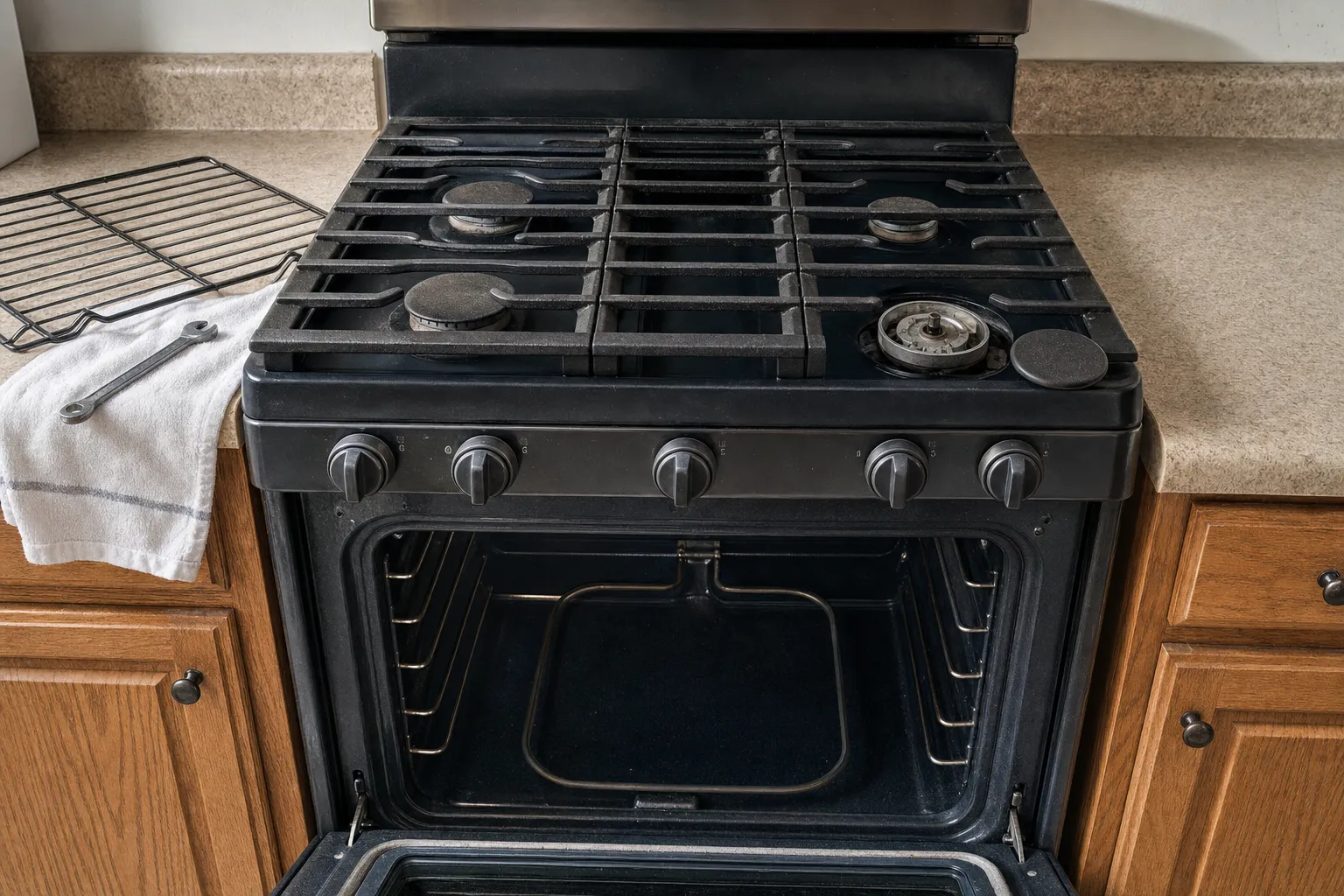
A Wolf dual fuel range runs on two supplies at once. The burners on top are gas, lit by a spark. The oven underneath is electric, on a dedicated 240/208-volt circuit: 30 amps for a single-oven range and 50 for a double, by Wolf’s installation guide. When a dual fuel range goes wrong, the first question is which of the two supplies the fault belongs to, and the answer usually shows before anything is opened.
How we read a dual fuel range
We start with what still works. Burners that light while the oven stays cold point to the electric side. An oven that heats while one burner clicks and never catches points to the gas side. A range that does neither sends us to the supply before either. Only then does the meter come out, and on the electric side the reading starts where the supply enters the range, at its terminal block, rather than at the control.
How a range was installed decides how it comes out of its opening, which is why the series begins with an installation note rather than a fault.
We repair Wolf dual fuel ranges on Mercer Island: Mercer Island Wolf Appliance Repair, (206) 785-2960, reads both halves on the $89 visit.
Reading the series
The notes run from B0 to B4 in the order we would reach them on a visit: the installation first, then the electric oven, then the gas burners, then the oven’s accuracy. Each note opens with what we find when we arrive and closes with the checks from our bench. Gas work inside the range is ours. An owner’s side of it stops at the burner caps and the knobs, and any smell of gas means leaving the house and calling the utility from outside.
The notes, in reading order
- B0 Anchored, Flexible, Slack: Installing a Wolf Range Over the Seattle Fault Zone The three details under a range on a fault-zone island: the anti-tip bracket, the gas connector, the duct joint.
- B1 Burners Light, Oven Dead: Reading the 240-Volt Side Burners light, the oven stays dark or cold: the knob and the settings, then the breaker, then both legs of the supply, then the oven's own parts.
- B2 A Dual Fuel Oven That Never Came Back From Self-Clean The clean finished and the oven stayed locked or cold: the cool-down first, then a power cut mid-cycle, the protection, the latch and the elements.
- B3 Spark Without Flame on a Dual Fuel Top A burner that sparks and never catches: the cap seat and moisture first, then the electrode, the knob's switch and last the module.
- B4 Below the Dial: A Wolf Oven That Runs Cool An oven that preheats and then settles under the dial: the shape of the error, the sensor, each heat source and the door.
Asked about this series
Is a dual fuel range harder to repair than an all-gas one?
Not harder, just two systems in one frame. The gas side fails the way any sealed-burner top does; the electric side adds elements, a temperature sensor and a 240-volt supply that has to arrive on both of its legs. Mercer Island Wolf Appliance Repair checks both halves on a dual fuel visit, and the $89 fee covers it.
Can a tripped breaker explain an oven that is dead while the burners work?
It can, and it is the first thing worth ruling out. A dual fuel range runs on its own dedicated circuit, and if only part of that supply reaches the range, some functions can carry on while the oven does not. Switching the breaker fully off and back on is an owner check; anything beyond the panel is ours, on (206) 785-2960.
Why is an installation note filed in a repair series?
Because the details it covers, the anti-tip bracket, the flexible gas connector and the duct joint above, decide how easily the range comes out for every repair after it. On an island inside the Seattle Fault Zone they also decide how the range behaves when the ground moves, so Mercer Island Wolf Appliance Repair looks at them on any visit.